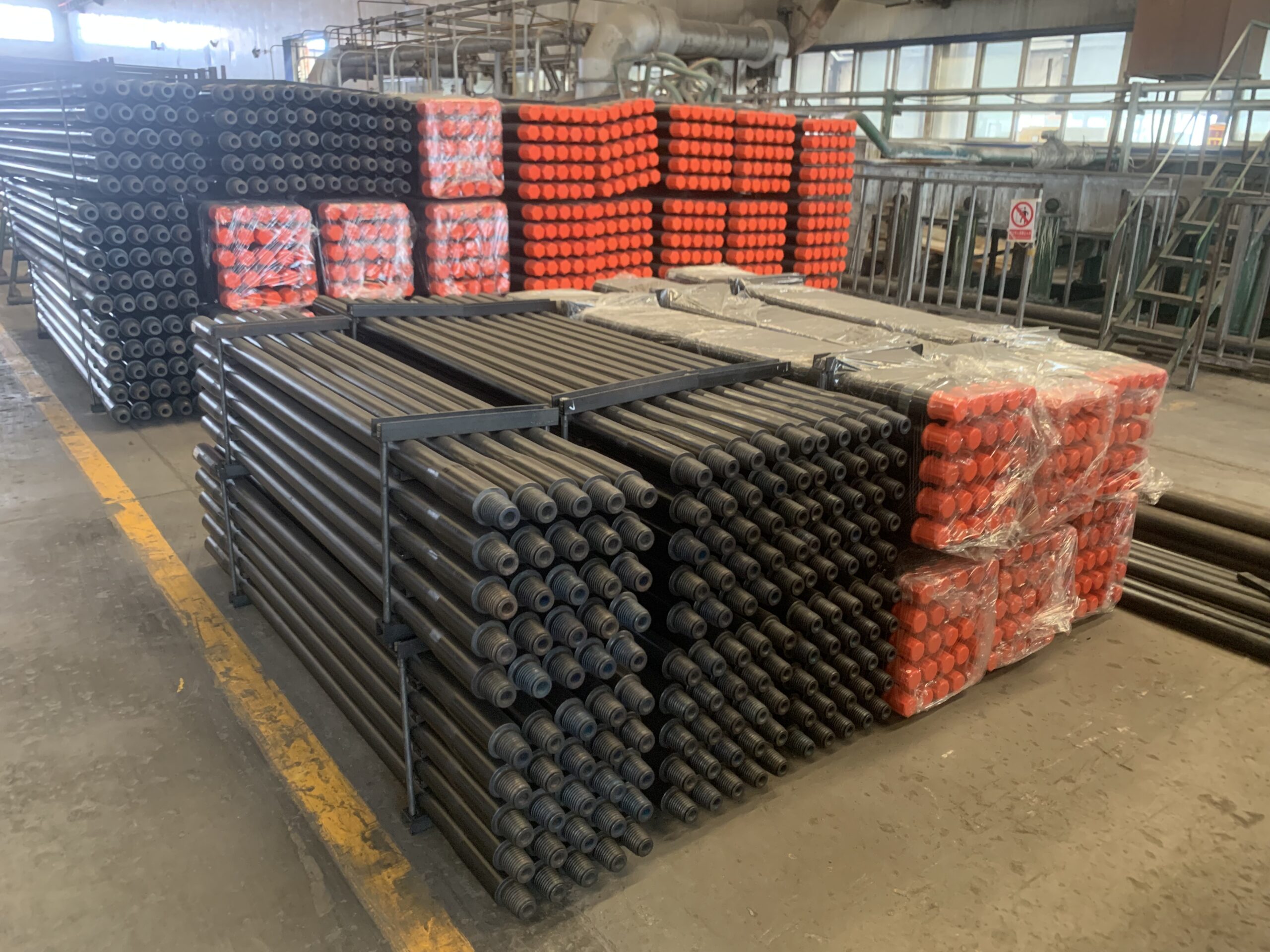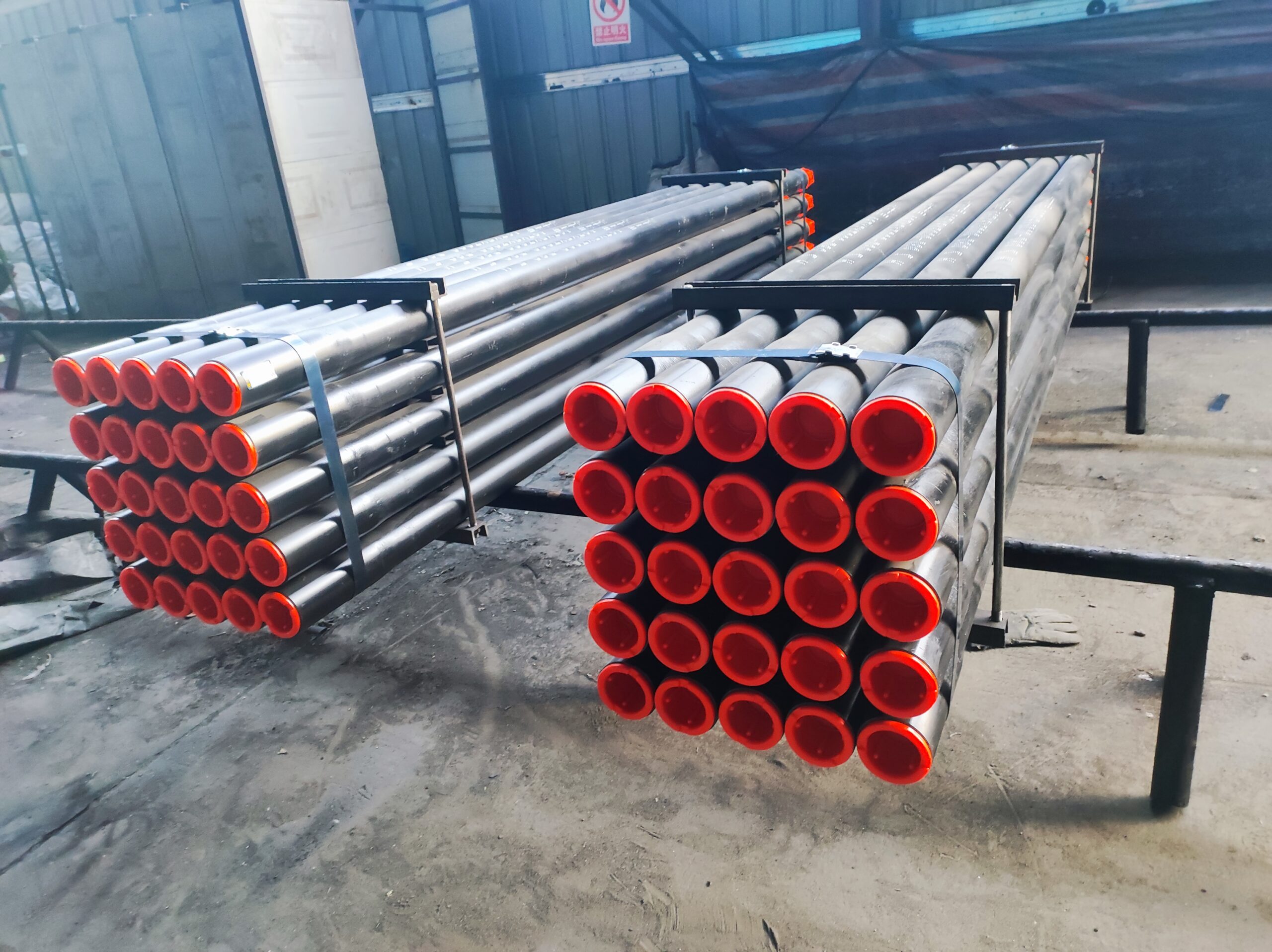
Choosing the right drill pipe grade is an important decision for oil and gas drilling projects. The grade affects the mechanical strength of the drill pipe body, but it should never be evaluated by grade name alone.
For drilling contractors and international buyers, the most commonly compared API 5DP grades are E75, X95, G105, and S135.
The higher the grade, the higher the specified minimum yield strength of the drill pipe body. However, that does not mean S135 is automatically the best choice for every drilling program.
Drill pipe performance also depends on:
- Pipe outside diameter
- Wall thickness
- Pipe weight
- Tool joint design
- Connection
- Tensile loading
- Rotary torque
- Internal pressure
- Bending and fatigue
- Dogleg severity
- Corrosion and wall loss
- Inspection condition
API Spec 5DP specifies technical delivery conditions for steel drill pipe with upset pipe-body ends and welded tool joints used in drilling and production operations, and covers grade families including E, X, G and S.
For buyers, the important question is therefore not simply “Which drill pipe grade is strongest?”
The better question is:
“Which API 5DP grade provides the appropriate strength and service margin for my actual drilling loads and well profile?”
API 5DP Drill Pipe Grade Comparison
The commonly used API 5DP drill pipe grades can be compared by their specified yield and tensile strength ranges.
| Grade | Minimum Yield Strength | Maximum Yield Strength | Minimum Tensile Strength | General Position |
|---|---|---|---|---|
| E75 | 75 ksi / 517 MPa | 105 ksi / 724 MPa | 100 ksi / 689 MPa | Lower-strength conventional grade |
| X95 | 95 ksi / 655 MPa | 125 ksi / 862 MPa | 105 ksi / 724 MPa | Intermediate-strength grade |
| G105 | 105 ksi / 724 MPa | 135 ksi / 931 MPa | 115 ksi / 793 MPa | Higher-strength drilling grade |
| S135 | 135 ksi / 931 MPa | 165 ksi / 1,138 MPa | 145 ksi / 1,000 MPa | High-strength grade |
These strength values are consistent with published API 5DP/ISO 11961 reference tables.
The grade designation is therefore closely related to the minimum yield-strength level, but strength grade is only one part of drill string design.
What Does the Drill Pipe Grade Mean?
The number associated with the common API grades represents the minimum specified yield-strength level in thousands of psi.
For example:
E75 → 75 ksi minimum yield strength
X95 → 95 ksi
G105 → 105 ksi
S135 → 135 ksi
Yield strength is important because it indicates the stress level associated with the specified onset of permanent deformation in the pipe body.
But a buyer should not interpret the number as a direct measurement of how much total load a complete drill pipe joint can carry.
Actual capacity depends on the complete pipe configuration, including dimensions, wall thickness, upset, tool joint, connection, and condition.
E75 Drill Pipe
E75 is the lowest-strength grade among the commonly compared E75, X95, G105 and S135 grades.
It has a minimum yield strength of 75,000 psi (517 MPa) and a minimum tensile strength of 100,000 psi (689 MPa).
E75 can be considered when the drilling program has relatively moderate loading requirements and the drill string does not require the higher strength margin provided by X95, G105 or S135.
Potential applications can include:
- Conventional drilling
- Relatively moderate-depth drilling sections
- Lower-load drilling environments
- Well profiles with limited directional severity
- Applications where tensile and torque demand remain controlled
However, the appropriate grade should always be determined from the actual drilling loads.
A buyer should not choose E75 simply because the application is described as “standard drilling.”
X95 Drill Pipe
X95 provides a higher strength level than E75.
Its minimum yield strength is 95,000 psi (655 MPa) and its minimum tensile strength is 105,000 psi (724 MPa).
X95 can provide additional strength margin where an E75 drill string may not provide sufficient capacity.
Depending on the actual pipe dimensions and drilling conditions, X95 may be considered for:
- Deeper drilling sections
- Higher tensile loading
- Moderate directional drilling
- Longer drill strings
- Increased torque and drag
- More demanding service compared with conventional drilling
It is useful to think of X95 as a higher-strength option rather than simply calling it a “premium” version of E75.
The correct grade depends on the engineering requirements.
G105 Drill Pipe
G105 is a higher-strength API drill pipe grade with a minimum yield strength of 105,000 psi (724 MPa) and a minimum tensile strength of 115,000 psi (793 MPa).
G105 is widely used in more demanding drilling programs where greater pipe-body strength is required.
Potential applications include:
- Deeper wells
- Higher tensile loads
- Directional drilling
- Greater torque and drag
- Longer drill strings
- More demanding drilling profiles
However, moving from X95 to G105 should not be based solely on the desire for a higher grade.
The designer should also consider:
- Connection strength
- Tool joint dimensions
- Pipe wall thickness
- Fatigue exposure
- Dogleg severity
- Handling conditions
- Inspection requirements
S135 Drill Pipe
S135 is the highest-strength grade among the commonly compared E75, X95, G105 and S135 grades.
Its minimum yield strength is 135,000 psi (931 MPa), while its minimum tensile strength is 145,000 psi (1,000 MPa).
S135 is generally considered when drilling conditions involve substantially higher tensile, torque, or combined loading requirements.
Potential applications can include:
- Deep drilling
- Extended-reach drilling
- Long horizontal sections
- High-torque applications
- High hook-load conditions
- Complex directional well profiles
But S135 should not automatically be considered the “best” drill pipe simply because it has the highest strength grade.
A drill string is a complete mechanical system.
Fatigue, connection performance, bending, wall loss, handling damage, and drilling dynamics still need to be evaluated.
E75 vs X95: What Is the Difference?
The main difference is the specified strength level.
E75 has a lower minimum yield strength than X95.
In simplified terms:
E75 → 75 ksi minimum yield
X95 → 95 ksi minimum yield
The additional strength margin provided by X95 may be useful when drilling loads exceed the practical range for E75.
However, simply upgrading to X95 does not automatically solve:
- Excessive torque
- Poor BHA design
- Severe doglegs
- Fatigue cracking
- Damaged connections
- Corrosion
- Insufficient wall thickness
A stronger pipe body cannot compensate for every drill-string problem.
X95 vs G105: What Is the Difference?
G105 raises the minimum yield-strength level to 105 ksi, compared with 95 ksi for X95.
The difference may appear relatively small numerically, but the correct selection depends on the loads, dimensions, connection, and service conditions of the complete drill string.
G105 may be appropriate when:
- Tensile loading is higher
- The well is deeper
- Torque and drag increase
- Directional exposure becomes more significant
- Additional strength margin is required
For directional drilling, however, fatigue can be just as important as static strength.
A drill pipe subjected to repeated bending cycles can experience fatigue even when its nominal tensile capacity appears sufficient.
G105 vs S135: Is S135 Always Better?
No.
S135 provides a substantially higher specified minimum yield strength than G105:
G105 → 105 ksi minimum yield
S135 → 135 ksi minimum yield
That additional strength can be valuable in demanding drilling programs.
But higher grade does not automatically mean higher overall reliability.
The complete system still has to be evaluated.
Important considerations include:
- Actual tensile load
- Torque
- Bending
- Fatigue cycles
- Connection capacity
- Wall thickness
- Tool joint condition
- Dogleg severity
- Inspection history
A properly engineered G105 string can be more appropriate than an unnecessarily upgraded S135 string.
Does a Higher Drill Pipe Grade Allow a Longer Drill String?
A higher-strength grade can provide greater pipe-body strength margin, but drill-string length cannot be determined from grade alone.
The design must also consider:
- Pipe dimensions
- Nominal weight
- Wall thickness
- Buoyancy
- Mud density
- Hook load
- Overpull
- Connection strength
- Torque
- Bending
- Fatigue
For example, a higher-grade pipe with a thinner wall or significant wall loss does not automatically provide the same usable capacity as a thicker pipe of another grade.
This is why drill-string design should be based on actual loads and remaining cross-sectional area.
Drill Pipe Grade vs Pipe Wall Thickness
Grade and wall thickness are two different design variables.
The grade determines the specified material-strength range.
Wall thickness determines how much steel cross-sectional area is available to carry load.
Consider two hypothetical drill pipes:
Pipe A
G105 with relatively thick wall
Pipe B
S135 with substantially reduced wall thickness
The S135 pipe may have the higher material strength, but the actual load capacity of the complete joint depends on geometry as well as material properties.
This is particularly important for used drill pipe.
Wear and wall loss can significantly reduce the available structural margin.
Drill Pipe Grade vs Tool Joint Strength
The drill pipe body is only one part of the connection system.
A typical drill pipe consists of:
Pipe Body + Upset + Weld + Tool Joint + Connection
The complete joint has to be evaluated as a system.
A high-strength pipe body does not automatically mean the connection is stronger under every loading mode.
Buyers should therefore request complete technical information about:
- Pipe body grade
- Tool joint grade
- Connection
- Tool joint dimensions
- Upset type
- Wall thickness
- Tensile capacity
- Torque capacity
Why Connection Type Matters
The connection transfers mechanical loads between drill pipe joints and other drilling components.
Depending on the drilling program, different rotary shouldered connections may be specified.
The correct connection must be compatible with:
- Existing drill string
- Tool joints
- BHA
- Rig
- Downhole tools
- Torque requirements
When replacing an existing drill pipe string, buyers should not select the grade independently of the connection.
The complete specification needs to match the existing drilling system.
What Is More Important: Grade or Connection?
Neither should be considered independently.
The grade describes the pipe-body material strength range.
The connection determines how the joints transfer mechanical loads.
The final drill-string performance depends on the combined design.
For procurement, the buyer should therefore verify:
Grade + OD + Wall Thickness + Upset + Tool Joint + Connection
rather than purchasing according to grade alone.
Drill Pipe Grade and Directional Drilling
Directional drilling creates additional mechanical challenges.
A drill string may experience:
- Tension
- Compression
- Torque
- Bending
- Cyclic fatigue
- Drag
- Buckling
As dogleg severity increases, repeated bending can become a major fatigue concern.
This means that selecting a stronger grade is not the only consideration.
A directional drilling program should also evaluate:
- Well trajectory
- Dogleg severity
- BHA design
- Rotational speed
- Sliding vs rotating intervals
- Fatigue exposure
- Connection condition
For high-cycle directional applications, fatigue management can be just as important as yield strength.
Drill Pipe Grade and Torque
Drill pipe transmits rotary torque from the surface system through the drill string.
The required torque depends on:
- Formation
- Bit
- BHA
- Hole size
- Well trajectory
- Friction
- Drilling parameters
Higher-grade drill pipe can provide greater strength margin, but the final torque capability is also influenced by connection geometry and pipe dimensions.
Therefore:
Higher grade ≠ unlimited torque capacity
Torque should always be evaluated against the complete drill-string specification.
Drill Pipe Grade and Fatigue
Fatigue is particularly important because drill pipe can experience repeated load cycles.
Fatigue can be influenced by:
- Dogleg severity
- Rotation
- Bending
- Connection geometry
- Surface damage
- Corrosion pits
- Slip marks
- Weld-zone conditions
- Repeated loading
A drill pipe can therefore experience fatigue damage even when the maximum tensile load remains below the nominal yield strength.
For this reason, inspection and fatigue management are essential in demanding drilling applications.
How Corrosion and Wall Loss Change Drill Pipe Capacity
New drill pipe specifications and used drill pipe specifications should not be treated in the same way.
A used joint can experience:
- Internal corrosion
- External corrosion
- Mechanical wear
- Handling damage
- Washout
- Wall thinning
- Local pits
These conditions reduce the effective cross-sectional area.
Consequently, the original grade designation does not tell you the entire current condition of the pipe.
For used drill pipe, inspection data is essential.
How Inspection Quality Affects Drill Pipe Reliability
For critical drilling applications, buyers should consider the inspection status of the pipe.
Depending on the project, relevant records may include:
- Dimensional inspection
- Visual inspection
- Thread inspection
- NDT records
- Wall-thickness measurements
- Tool joint inspection
- Weld-area inspection
- Hardbanding inspection
- Material certificates
API 5DP defines technical delivery conditions, while project-specific inspection requirements should be established separately according to the drilling application’s risk and acceptance criteria.
How to Choose Between E75, X95, G105 and S135
Instead of starting with the question:
“Which grade is strongest?”
start with:
“What load does the drill string actually need to withstand?”
Then evaluate:
Step 1 — Determine Maximum Tensile Load
Estimate the maximum expected tension, including appropriate design margin.
Step 2 — Determine Torque Requirements
Evaluate rotary torque under expected drilling conditions.
Step 3 — Review the Well Profile
Consider:
- Vertical sections
- Build sections
- Tangent sections
- Horizontal sections
- Dogleg severity
Step 4 — Evaluate Fatigue Exposure
Determine whether repeated bending and rotation are significant.
Step 5 — Check Pipe Dimensions
Review:
- OD
- ID
- Wall thickness
- Nominal weight
- Upset type
Step 6 — Check Tool Joint and Connection
Make sure the selected pipe works with the existing drill-string system.
Step 7 — Consider Inspection Requirements
For critical projects, confirm the necessary inspection and documentation level.
Step 8 — Select the Appropriate Grade
Only after the previous factors have been evaluated should the drill pipe grade be finalized.
A Practical Comparison of E75, X95, G105 and S135
| Grade | Strength Level | Typical Design Consideration |
|---|---|---|
| E75 | Lower | Moderate drilling loads |
| X95 | Intermediate | Increased tensile and torque margin |
| G105 | Higher | Deep and more demanding drilling |
| S135 | High | High-load, directional and extended-reach applications |
These descriptions are deliberately broad.
Actual selection should be based on engineering calculations and the final pipe specification, not on a generic application label. Published industry references similarly emphasize that grade should be considered together with dimensions, loading, connection and drilling conditions.
Common Mistakes When Buying API Drill Pipe
Choosing the Highest Grade Automatically
S135 is not automatically the right choice for every well.
Higher material strength does not eliminate fatigue, connection, handling, or corrosion risks.
Selecting Based Only on OD
Two drill pipes with the same outside diameter can have different wall thicknesses and mechanical capabilities.
Ignoring Connection
A drill pipe with the wrong connection may not be compatible with the existing drill string.
Ignoring Tool Joint Dimensions
Tool joint performance is critical to torque and connection reliability.
Ignoring Used-Pipe Condition
A grade designation does not describe the current condition of a used joint.
Buying Based Only on Price
A lower unit price can become expensive if the pipe produces reliability problems or does not meet the required inspection standard.
What Should Be Included in a Drill Pipe Purchase Specification?
Before issuing a purchase order, buyers should clearly specify:
- Drill pipe grade
- Outside diameter
- Inside diameter
- Wall thickness
- Nominal weight
- Upset type
- Tool joint size
- Connection
- Overall length range
- Manufacturing standard
- Inspection requirements
- NDT requirements
- Material certification
- Thread inspection
- Marking and traceability
- Hardbanding requirements if applicable
- Internal coating requirements if required
This makes it significantly easier to compare different suppliers on a technical basis.
How to Compare Two Drill Pipe Suppliers
Do not compare suppliers based only on:
Price per Joint
Instead, compare:
| Item | Supplier A | Supplier B |
|---|---|---|
| Grade | Confirm | Confirm |
| OD / ID | Confirm | Confirm |
| Wall thickness | Confirm | Confirm |
| Tool joint | Confirm | Confirm |
| Connection | Confirm | Confirm |
| Upset | Confirm | Confirm |
| Length range | Confirm | Confirm |
| NDT | Confirm | Confirm |
| Thread inspection | Confirm | Confirm |
| Material certificate | Confirm | Confirm |
| Hardbanding | Confirm | Confirm |
| Coating | Confirm | Confirm |
| Traceability | Confirm | Confirm |
This prevents technically different products from being compared as if they were identical.
What Documents Should a Drill Pipe Buyer Request?
Depending on the project and agreed inspection plan, useful documentation can include:
- Material Test Certificate
- Dimensional inspection report
- Thread inspection report
- NDT report
- Heat-treatment records where applicable
- Manufacturing traceability
- Packing list
- Product specification
- Inspection certificate
The exact document package should be agreed before production.
Frequently Asked Questions
What is the difference between E75, X95, G105 and S135 drill pipe?
The main difference is the specified mechanical strength range of the drill pipe body. Their minimum yield strengths are 75, 95, 105 and 135 ksi respectively.
Is S135 drill pipe better than G105?
Not automatically. S135 has a higher strength grade, but the appropriate choice depends on tensile load, torque, dimensions, connection, fatigue exposure, well profile and inspection requirements.
What does G105 mean on drill pipe?
G105 identifies a drill pipe grade with a specified minimum yield strength of 105,000 psi.
What is S135 drill pipe used for?
S135 is generally considered for more demanding drilling conditions where high tensile and mechanical strength margins are required, including deep, directional, high-torque and extended-reach drilling applications.
Can I replace E75 with X95 drill pipe?
Potentially, but the complete drill-string specification must be checked. OD, ID, wall thickness, tool joints, connection, BHA compatibility and operating loads all need to be considered.
Does a higher drill pipe grade increase torque capacity?
A higher material strength can increase strength margin, but torque capacity is also influenced by pipe dimensions, connection geometry, tool joint design and the condition of the pipe.
Which API drill pipe grade is best for deep drilling?
There is no universal best grade. G105 and S135 are commonly evaluated for more demanding deep drilling conditions, but the actual grade should be selected from the expected load and drill-string design.
What should I check when buying used drill pipe?
Check grade, dimensions, wall thickness, connection condition, tool joints, inspection records, NDT results, corrosion, wear, handling marks, and traceability.
What standard covers API drill pipe?
API Specification 5DP covers technical delivery conditions for steel drill pipe with upset pipe-body ends and welded tool joints used in petroleum and natural-gas drilling and production operations.
Can a drill pipe manufacturer recommend the correct grade?
A manufacturer can provide technical guidance when given the required drilling parameters, well profile, pipe dimensions, connection, expected loads and inspection requirements. Final string design should be based on the project’s engineering calculations and acceptance criteria.
Final Thoughts
Choosing between E75, X95, G105 and S135 should not be treated as a simple strength ranking.
Each grade represents a different specified strength level, but actual drill-string performance depends on a much larger set of variables.
The correct selection should consider:
Grade
Pipe Dimensions
Wall Thickness
Tool Joint
Connection
Tensile Load
Torque
Bending
Fatigue
Well Profile
Inspection Condition
For a conventional drilling application with moderate loading, a lower-strength grade may be entirely appropriate.
As drilling depth, torque, directional complexity, and tensile loading increase, higher grades such as G105 or S135 may provide additional strength margin.
But the highest grade is not automatically the most economical or reliable solution.
For international buyers, the safest procurement approach is to compare the complete drill pipe specification, not simply the grade printed on the quotation.
At US Drill Pipe, drill pipe specifications should be evaluated according to the actual drilling application, equipment requirements, connection, and operating conditions. For a project-specific quotation, provide the required OD, grade, connection, length, drilling application, expected loads, and inspection requirements so the appropriate drill pipe configuration can be evaluated.